Press ESC to close

Nowadays, people’s living standards have improved significantly. As a new type of energy and fuel, gas is widely used in daily life, bringing great convenience to people’s lives. However, gas has special inherent characteristics: it is explosive, toxic and flammable. In addition, gas supervision has become increasingly difficult, equipment maintenance and management are challenging to carry out, gas has a low safety factor, and inspectors face high risks during detection. Any malfunction in gas equipment can lead to extremely severe consequences.
Since gas is a public utility, is pressurized, and possesses flammable, explosive and toxic properties, emphasizing safe production is absolutely essential. This code stipulates that urban gas engineering design must meet the requirements of safe production, reliable supply, rational gas use and environmental protection.
Code for Construction and Quality Acceptance of City Indoor Gas Engineering (CJJ 94-2003) came into force on August 1, 2003. Its main contents include: General Provisions, Installation of Indoor Gas Pipelines, Installation of Gas Meters, Installation of Gas Equipment, and Inspection, Testing and Acceptance of Indoor Gas Pipelines and Gas Appliance Installation.
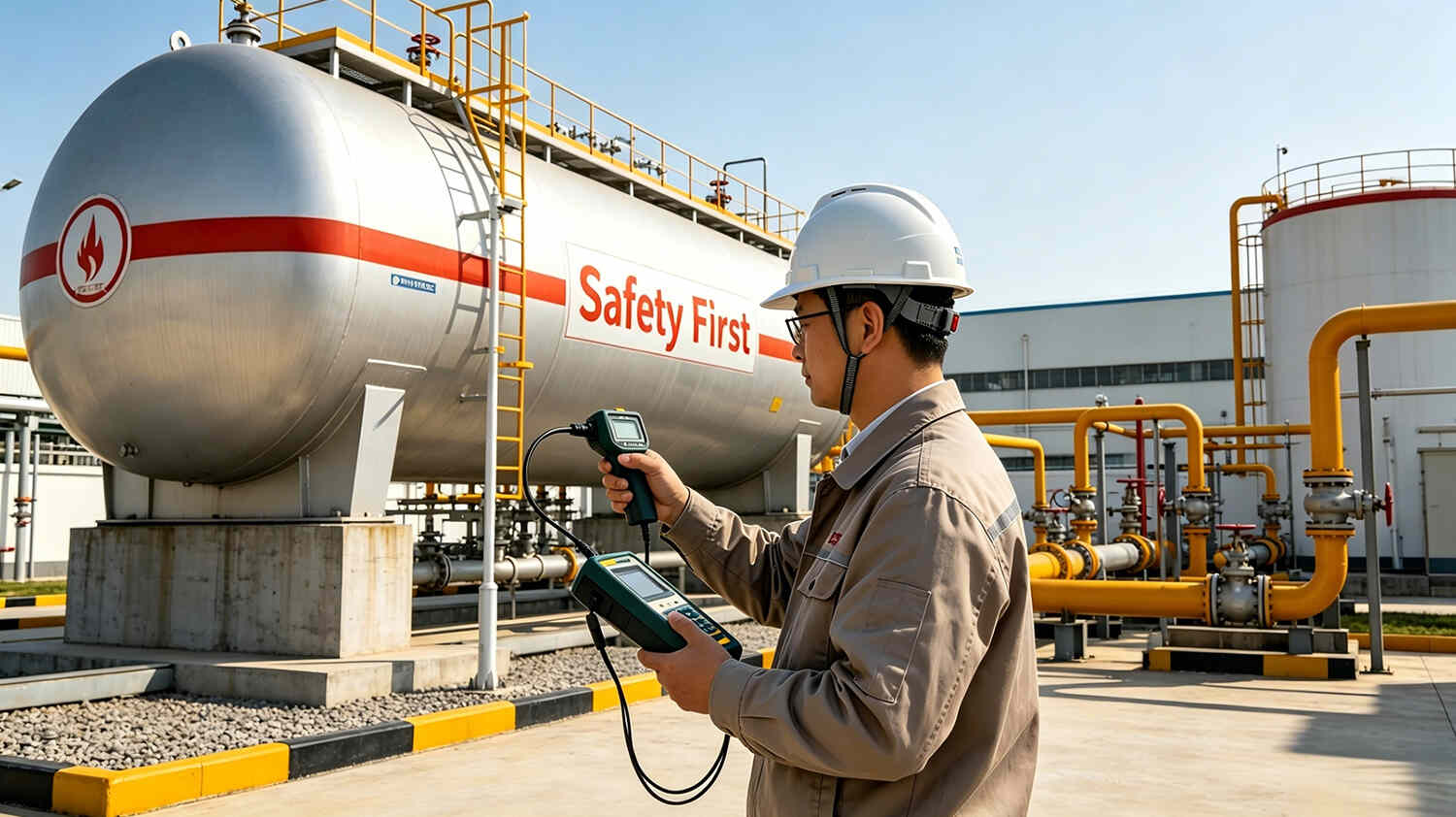
Reliability-Centered Maintenance (RCM) evaluates failures and ranks their criticality in the following order:
1. Potential Failure
A condition that currently has no direct impact on equipment, but would result in severe consequences if the failure were to occur.
2. Safety-Related Failure
A failure that, once it occurs, endangers personal safety and human life. Leakage from LPG storage tanks and wet spiral coal gas holders poses explosion risks and threatens personal safety. We classify corrosion and leakage of LPG storage tanks and coal gas holders as safety-related failures.
3. Operational Failure
A failure that, once it occurs, affects production operations and incurs direct repair costs. Malfunctions of Roots blowers in gas source stations (used to convey mine gas to municipal coal gas holders), regional pressure regulating stations and pressure regulators are categorized as operational failures.
4. Non-Operational Failure
A type of failure that generally does not disrupt production operations but increases repair expenses. Examples include malfunctions of machine shop tools, deep-well water pumps and standby diesel generators.
